
Spending long hours sitting can be just as demanding on the body as physical work. Whether you sit at a desk, drive for work, or spend evenings on the couch, prolonged sitting often leads to joint and muscular pain through the lower back. Over time, reduced movement, poor posture, and sustained loading can leave the spine feeling stiff, sore, and unsupported. At Benchmark Physio, we regularly help people ease this discomfort with simple, purposeful exercises for lower back pain that support better movement and long-term comfort.
Why sitting for long periods affects the lower back
When you sit for extended periods, the muscles that support your spine tend to become less active. Hip flexors tighten, glute muscles reduce their contribution, and the lower back absorbs more load than it should. This combination often leads to aching, stiffness, or sharp discomfort when standing up or moving after sitting.
Without regular movement, joint and muscular pain can build gradually. Lower back pain exercises aim to reverse this pattern by restoring mobility, encouraging muscle activation, and improving how the spine copes with daily demands.
What makes an exercise beginner-friendly
Beginner-friendly lower back pain exercises focus on control rather than intensity. They are designed to feel accessible, safe, and supportive, especially for people who are new to exercise or returning after a period of discomfort. The goal is to reintroduce movement without provoking symptoms.
At Benchmark Physiotherapy, these exercises are often paired with hands-on treatment to reduce stiffness and guide the body back toward healthier movement patterns.
Five simple exercises to ease sitting-related back pain
These exercises for lower back pain are commonly used to reduce stiffness caused by prolonged sitting and encourage better movement awareness.
- Seated pelvic tilts to gently mobilise the lower back and improve spinal awareness.
- Knee-to-chest movements performed slowly to reduce lower back tension and encourage flexion.
- Hip flexor stretches to counteract tightness created by sitting for long periods.
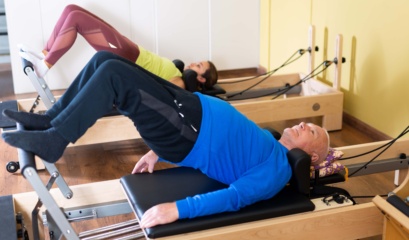
- Glute activation exercises such as supported bridges to help offload the lower back.
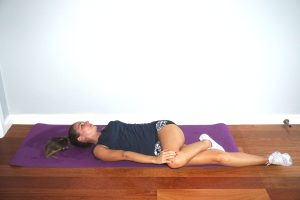
- Gentle spinal rotations performed within a comfortable range to restore movement variety.
These lower back pain exercises should feel controlled and manageable. Consistency and good technique are more important than pushing for range or repetitions.
When exercises work best alongside physiotherapy
While exercises can help, ongoing joint and muscular pain often benefits from a combined approach. Physiotherapy can address joint stiffness, muscle restriction, and movement patterns that exercises alone may not fully resolve.
Physiotherapy exercises for lower back pain are typically introduced progressively, based on how your body responds. This approach supports recovery while helping you build confidence in movement again.
Supporting your back during the workday
Breaking up sitting time can significantly reduce strain on the lower back. Standing up regularly, changing positions, and incorporating short movement breaks can help prevent stiffness from settling in.
When combined with targeted lower back pain exercises, these habits support a smoother transition away from discomfort and toward better movement tolerance throughout the day.
Building confidence beyond the chair
Lower back pain caused by prolonged sitting does not need to become part of your routine. With beginner-friendly exercises for lower back pain and the right physiotherapy support, it is possible to restore movement, reduce joint and muscular pain, and feel more capable day to day.
At Benchmark Physiotherapy, our focus is on helping people recover fully and move forward with confidence. If sitting for long periods is contributing to your back pain, a tailored physiotherapy plan can help you return to stronger, more comfortable movement.