

Physiotherapy For Upper Back Pain
Upper back pain rarely shows up for no reason. For many people, it builds over time through stiffness, reduced thoracic mobility, sitting for long periods, training load, or daily habits that keep the area under strain.
At Benchmark Physio, we take a hands-on, expert approach to upper back pain physio. We look beyond the sore spot to assess how your upper back is moving, what may be driving the pain, and what needs to change to help it settle and stay settled.
If your upper back feels tight or stiff, you have pain between the shoulder blades, or stretching only gives short-term relief, we can help you work out the pattern and treat it properly.
Why upper back pain keeps coming back
A lot of upper back pain follows a pattern.
It can flare after long days at a desk, heavy training blocks, repetitive work, poor recovery, or too much load through an area that is already stiff and not moving well. Some people feel it as tightness between the shoulder blades. Others notice upper back stiffness when twisting, reaching, sitting upright, or taking a deep breath.
The issue is not always posture on its own. More often, it is a mix of thoracic spine stiffness, reduced movement tolerance, and daily load that your body is no longer handling well.
That is why short-term relief often does not last. If the underlying drivers stay the same, the pain usually does too.
A proper assessment for upper back pain matters
When upper back pain keeps returning, the first job is to understand why.
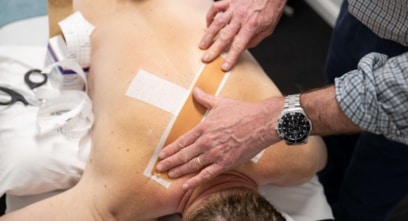
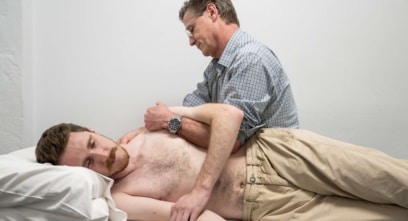
At Benchmark, your assessment is designed to look at more than symptoms. We assess how your thoracic spine is moving, where stiffness is building, how well the area handles load, and whether movement restrictions are feeding the pain.
This helps us work out whether your upper back pain may be driven by:
- thoracic spine stiffness
- reduced movement capacity
- overload from work or training
- poor tolerance to sitting or sustained positions
- tension building through the upper back and shoulder blade region
- repeated aggravation from daily habits
The goal is to stop guessing. We want to identify what is driving the pattern so treatment can be specific, useful, and tailored to you.
How physio can help upper back pain
Physio can help when upper back pain is linked to movement restriction, stiffness, poor load tolerance, or recurring strain.
Treatment may include:
- hands-on treatment to reduce stiffness and improve movement
- thoracic mobility work
- exercise to improve movement capacity and control
- load management advice for work, training, and daily activity
- practical strategies to reduce repeated aggravation
The aim is not just to loosen the area up for a day or two. It is to improve how your upper back moves and handles load so the pain is less likely to keep returning.
Common upper back pain patterns we see
Upper back pain can show up in different ways. Common patterns include:
- pain between the shoulder blades
- a tight upper back that never quite relaxes
- stiffness after sitting for long periods
- discomfort when twisting, reaching, or extending
- pain that builds through work, driving, or study
- upper back pain that flares with gym training or poor recovery
If that sounds familiar, it is worth getting assessed. Recurring pain usually has a reason.
What upper back pain treatment at Benchmark looks like
We keep treatment practical.
First, we work out what is contributing to the pain. Then we build a plan around that. For some people, the main issue is thoracic stiffness. For others, it is poor movement capacity, repeated overload, or an upper back that is doing too much because other areas are not moving well.
Your plan may include treatment in the clinic, targeted exercise, mobility work, and changes to how you manage work, training, or prolonged sitting. The right mix depends on what your assessment shows.
Our aim is simple. Remove what is aggravating the problem, restore better movement, and help you move forward with a clearer plan.
When to book upper back pain physio
It is worth booking an assessment if:
- your upper back pain keeps coming back
- stretching only gives short-term relief
- you feel stiff through the middle or upper spine
- pain between the shoulder blades is affecting work or training
- sitting, twisting, or lifting keeps aggravating the area
- you want a clearer plan than just resting and hoping it settles


Frequently asked questions
Yes. Physio can help when upper back pain is linked to stiffness, reduced thoracic mobility, poor movement tolerance, or repeated overload.
Recurring upper back pain often follows a pattern. Common contributors include thoracic stiffness, long periods of sitting, work strain, gym load, and daily habits that keep aggravating the area.
Often, yes. Many people describe upper back pain as pain or tightness between the shoulder blades, especially when the thoracic spine is stiff or overloaded.
Yes. If pain between the shoulder blades is linked to upper back stiffness, movement restriction, or load through the thoracic spine, physio may help identify the driver and guide treatment.
If it keeps returning, affects work or training, or is not improving with simple self-management, it is worth getting assessed properly.
Book upper back pain physio in Sydney
If your upper back pain keeps returning, there is usually a reason.
Book an assessment with Benchmark Physio in Sydney and get a clear plan for upper back pain, stiffness, and movement-related strain.