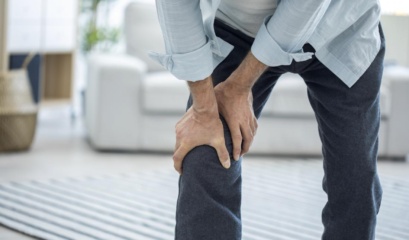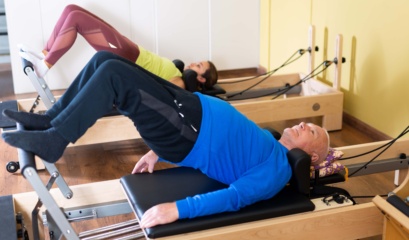

Gym patrons and fitness enthusiasts recovering from lumbar discomfort frequently turn to standard gluteal activation routines. They spend hours performing repetitive floor movements, searching for effective exercises for lower back pain to build long-term joint support. The distinct burning sensation in the side of the hip is commonly interpreted as a sign of structural progress. Without precise pelvic control, this popular rehabilitation movement can actively increase mechanical stress on the spine.
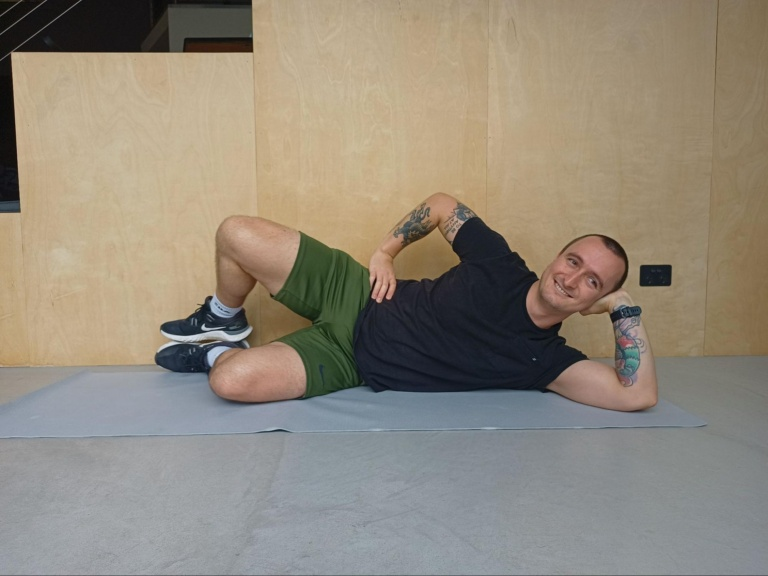
Performing a clamshell without clinical supervision frequently leads to subtle movement errors. Instead of isolating the target hip stabilisers, the body automatically finds paths of least resistance to bypass weak tissues. This mechanical compensation transforms a helpful corrective exercise into an overload mechanism, reinforcing the exact movement flaws driving your spinal irritation.
The structural link between gluteal weakness and lumbar stability
The pelvis functions as the primary mechanical foundation for the lower spine. To keep the vertebrae aligned during high-impact movement, the deep stabilising muscles of the hip must work continuously. The primary muscle responsible for this lateral support is the gluteus medius. When you walk, run, or train at the gym, the gluteus medius contracts to keep the pelvis level, preventing it from dropping or twisting abnormally under vertical load.
If the gluteus medius is weak or neurologically inhibited, the pelvis tilts sideways with every step. This un-stabilised movement forces the lumbar spine to bend laterally and rotate excessively to preserve your balance. This ongoing shear force places intense mechanical pressure on the intervertebral discs and facet joints. Strengthening the gluteal network is a fundamental objective of any modern back rehabilitation plan, but the movement must be executed with absolute precision to protect the spine.
How faulty recruitment patterns corrupt the clamshell
The classic side-lying clamshell appears simple: a patient keeps their feet together and raises the top knee to open the pelvis. In a clinical setting, this movement requires the lower back to remain completely still while the ball-and-socket hip joint rotates in isolation.
When an individual attempts this routine at home without a physical alignment check, the nervous system routinely cheats to complete the movement. If the gluteus medius is weak, the brain automatically recruits the tensor fasciae latae muscle at the front of the hip and the heavy erector spinae muscles of the lower back. To lift the leg higher, the individual twists their entire pelvis backward, pinching the lumbar facet joints and arching the spine. This means the patient is actively training their lower back to overwork, compounding the precise loading faults that caused the original injury. This mechanical error is why a standardised, one-size-fits-all approach fails to resolve deep structural issues.
The Pain to Performance framework for functional hip stability
Achieving lasting joint durability requires moving past unguided exercise lists to address the underlying cause of your movement dysfunction. Our Sydney clinics rely on a definitive three-stage methodology to safely rebuild your physical foundation: Pain to Performance.
This systematic process transitions your care through three clear operational phases: remove, restore, and redefine.
Remove compensatory spinal loading
The initial phase focuses on identifying the exact movement cheats that are irritating your back during daily activities and training. We perform a thorough physical assessment of your pelvic stability, core recruitment, and hip range of motion. By identifying these individual blind spots, we help you clear abnormal joint compression without forcing you to stop exercising entirely.
Restore authentic hip arthrokinematics
Before loading a muscle with targeted exercises, the underlying joint must possess full, unrestricted mobility. A locked hip joint capsule or a stiff sacroiliac segment cannot be resolved by floor exercises alone. This phase uses specialised, hands-on physiotherapy to manually glide the joint surfaces, release deep muscular restrictions, and correct pelvic alignment. This clinical preparation guarantees that the hip can rotate cleanly without forcing the lower back to twist.
Redefine pelvic endurance under load
Once normal joint mechanics are established, we introduce targeted activation protocols that isolate the gluteus medius without triggering lumbar compensation. We transition the patient into tailored exercises for lower back pain that incorporate tactile feedback, resistance bands, and precise pelvic cueing. We then progress these movements into weight-bearing variations, training your body to automatically stabilise your spine during daily activities and sport.
Why individualised movement analysis overrides standard routines
Many proactive individuals attempt to manage their recovery by tracking down popular exercise guides online. Without an expert eye to check your alignment, these general fitness routines frequently reinforce your body’s existing structural imbalances. A senior clinician can identify minor movement faults, such as a micro-rotation of the pelvis or a slight hip hike, that escape self-evaluation in a mirror. Correcting these subtle errors is what transforms a standard gym movement into a powerful therapeutic tool.
| Phase of recovery | Target outcome | Clinical focus |
| Remove | Clear abnormal spinal loading and compression | Movement screening, pelvic tilt analysis |
| Restore | Correct hip mobility and joint tracking | Manual joint mobilisations, soft tissue release |
| Redefine | Rebuild isolated gluteal capacity and control | Progressive loading, functional weight-bearing |
Indicators that your home routine is overloading your spine
Continuing to perform floor exercises while experiencing ongoing structural discomfort can delay authentic tissue healing. Musculoskeletal conditions require precise, targeted loading to recover properly. If you notice any of the following warning signs during your current home routine, your exercises are likely placing excessive force on your spine:
- A deep, dull ache in the lower back that builds gradually during or immediately after your hip exercises.
- The muscle at the front of your hip joint space gripping or tightening intensely, while the side of the buttock feels inactive.
- An inability to keep your pelvis completely vertical without leaning your upper body backward or bracing your arms heavily against the floor.
- Symptoms that quieten down during rest but consistently flare up whenever you increase your gym training volume.
Prioritise your recovery
Loading a misaligned joint with standardised fitness routines provides brief superficial activation while leaving your spine vulnerable to continuous irritation. At Benchmark Physio, our results-driven clinicians look beyond the surface symptoms to correct the true physical drivers of your pain, taking you safely from discomfort back to peak performance. You do not need a referral from a doctor to see our clinical team for a private consultation. Contact us directly or use our online booking system to book a physical assessment at your nearest Sydney clinic.