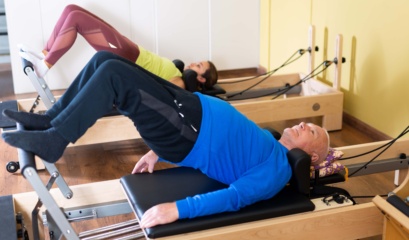


The knee sits directly between two major joints: the hip and the ankle. Because it operates primarily as a hinge, it relies heavily on those neighbouring joints for stability and alignment. When either end fails to pull its weight, the knee takes the extra stress.
The knee as the middle man
If your hip lacks strength or your ankle lacks movement, your knee gets twisted or pulled out of alignment under load. Treating the knee without evaluating the joints above and below it often leads to temporary relief at best.
How hip weakness impacts the knee
When hip stabilisers are weak, the thigh bone tends to rotate inward during single-leg movements like running or stepping down stairs. This inward movement puts excessive pressure under the kneecap, which is why hip strengthening exercises for knee pain are a core part of effective rehabilitation.
How ankle stability changes knee mechanics
Stiff or unstable ankles affect how your foot absorbs force when hitting the ground. If your ankle cannot flex properly, your knee compensates by shifting inward or taking on extra impact force. Adding targeted ankle stability exercises can resolve knee strain without ever touching the knee joint itself.
Why running knee pain is rarely just a knee problem
If you find yourself asking “why does my knee hurt when running?”, the answer rarely lies in a single muscle. Running involves thousands of impacts per kilometre, magnifying any slight imbalance along the leg chain.
Treating the whole chain at Benchmark Physio
Our approach combines hands-on manual therapy to clear joint stiffness at the hip or ankle with targeted strength exercises to restore balance across your entire leg.
Ready to get to the true source of your knee discomfort? Book a comprehensive physical assessment with Benchmark Physio today and get back to moving freely.